Portrait of Yotuel
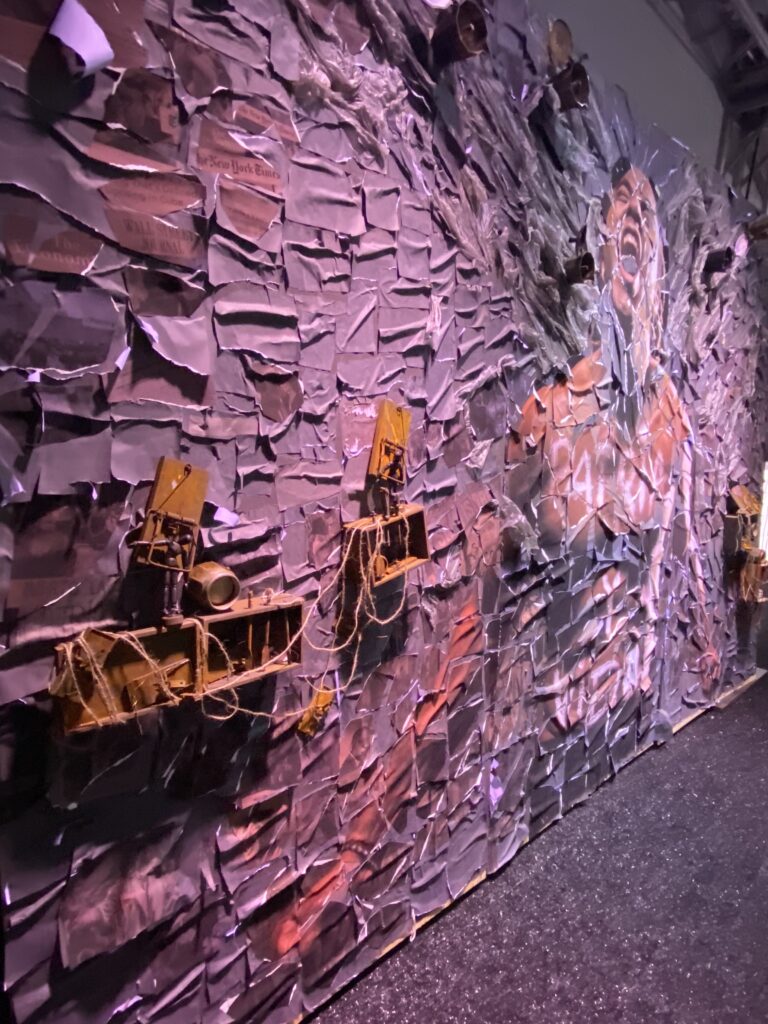
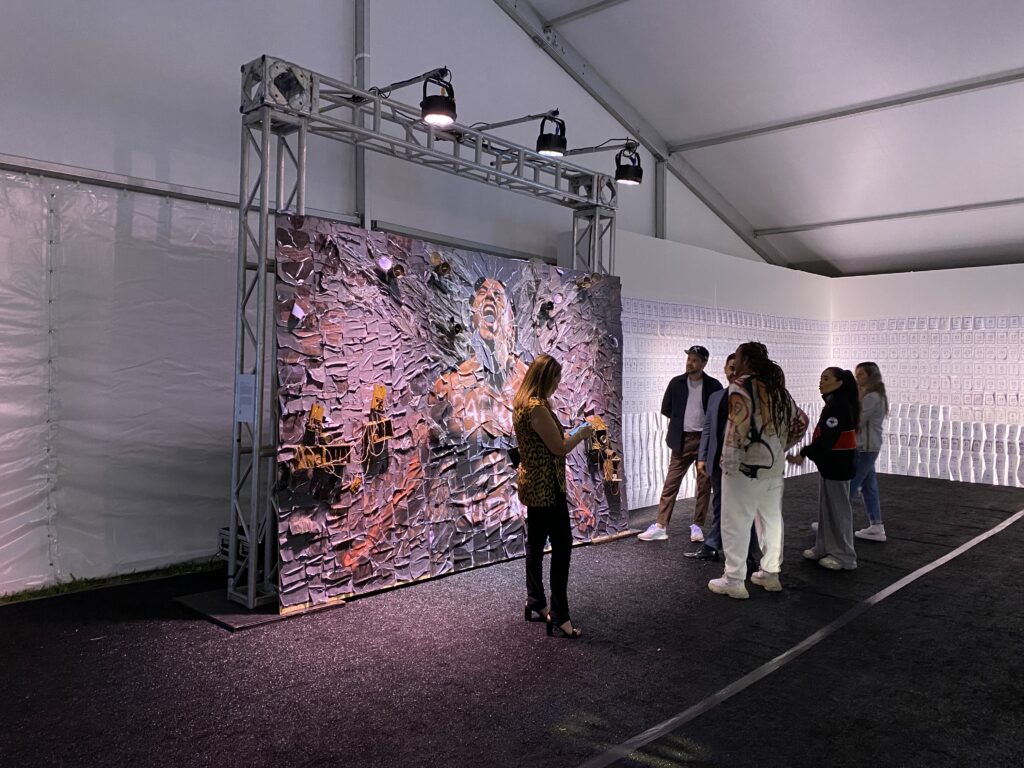
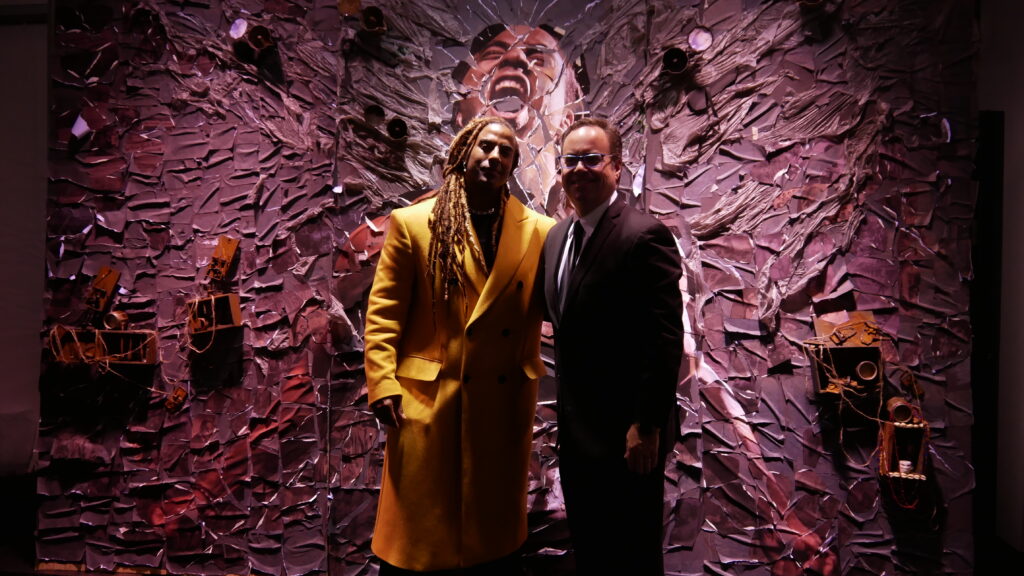
The mural entitled Patria Y Vida, 73 Portrait of Yotuel, was created by internationally renowned Cuban-American multidisciplinary artist Cesar Santalo in 2023, and will now be on exhibit, at FIU’s College of Law. 365 days a year, from 11:59 am-12:22 pm the sound of Cubans chanting “libertad, libertad,” and the song, “Patria Y Vida,” will resonate from several cafeteras mounted to the mural resembling speakers and megaphones. The times correspond to the lyrics from Patria Y Vida, “Tú 59, yo doble 2.”
The artist Cesar Santalo states, “as freedom is something many of us take for granted, it is imperative that students understand many other parts of the world do not have such a luxury.Lawyers play a vital role in providing legal representation to individuals and groups, and they challenge government actions that may violate these rights and advocate for legal protections to safeguard individual freedoms and protect against threats of authoritarianism and corruption.”
This striking artwork serves as a poignant visual commentary on the ongoing struggles faced by the Cuban people, particularly Afro-Cubans, and the repression of artistic expression under the “Ley de Peligrosidad” or the “Social Danger Law” under the Cuban government. The artwork was unveiled during Art Basel week on Wednesday, December 6, 2023, at Maurice A. FerréPark, Miami. The mural was part of the “Patria y Vida, the Forbidden Art Exhibition that featured the work of Cuban dissident artist Luis Manuel Otero Alcántara. Santalo is also the same artist that created the mural for the Latin Grammy nominated documentary, Patria y Vida, The Power of Music. The mural is used throughout the documentary as part of the visual narrative and storytelling.
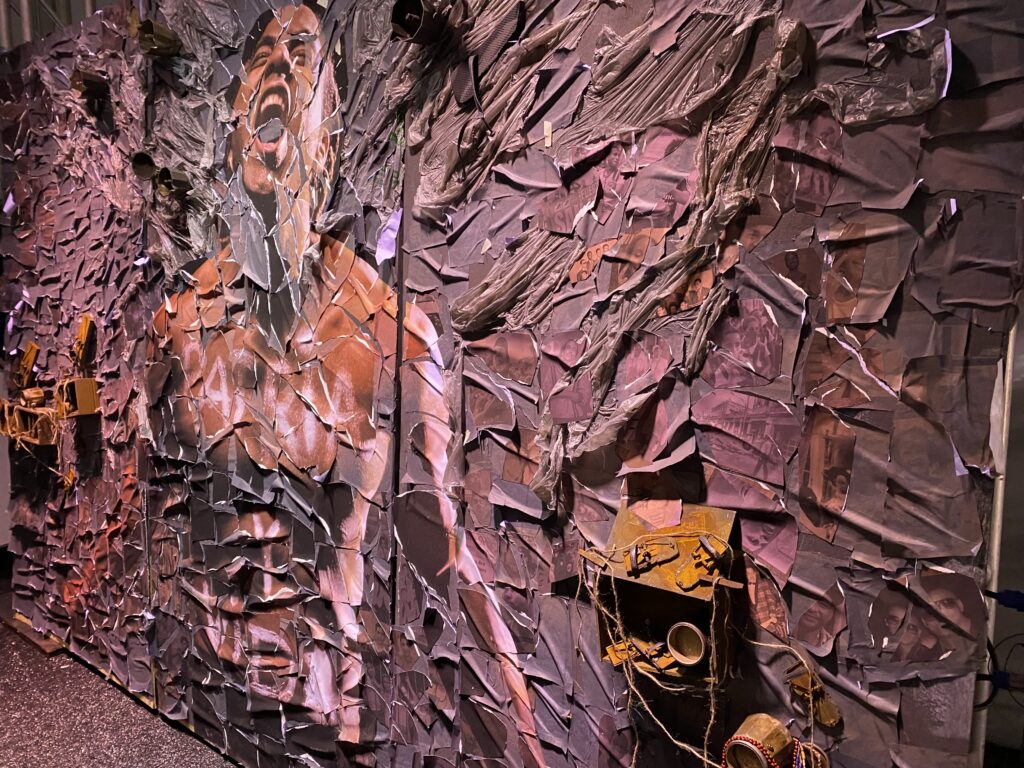
The centerpiece of the mural is Yotuel Romero, leader of the Patria y Vida movement in exile, whose image is surrounded by images of Maykel Osorbo, Gente de Zona, and El Funky. This artistic approach symbolizes a David-and-Goliath struggle against oppression, using non-violent expression to confront the disproportionate treatment of Afro-Cubans under the “Ley de Peligrosidad” or the “Social Danger Law.”
Santalo’s collage masterfully depicts a critical moment where Yotuel appears to choose between life and death. Despite the fragmented representation, mirroring the song’s narrative, Yotuel, like the lyrics, opts for life. The mural brings attention to the injustices faced by Afro-Cubans, who make up over a third of Cuba’s population and are disproportionately affected by the “La Ley de La Peligrosidad.”
The artwork also pays homage to the San Isidro movement, a group of dissenting artists and thinkers reacting to increased government censorship, particularly Decree 349, which requires prior authorization for artistic activities.
The mural also serves as a timeline of Afro-Cuban musical history, depicting influential figures from Benny Moré to contemporary artists like Rapper Maykel Castillo “El Osorbo” and visual artist Luis Manuel Otero Alcántara, who are currently incarcerated. It highlights the rich cultural diaspora and ongoing struggles of the Cuban people through carefully selected images, objects, and writings.
Santalo’s mixed media collage incorporates a unique aesthetic, using string to simulate a crime wall, representing government crackdowns on expression and dissent. Muted background colors and grunge textures evoke the urban decay of Cuban neighborhoods. Espresso coffee pots, a recurring theme in Santalo’s work, project audio, including an AI-generated rendition of Celia Cruz singing “Patria Y Vida” and sounds of Afro-Cuban drummers and dancers.
The artist’s intentional use of damaged cafeteras represents censorship and control, while distorted tops resemble charms revealing suppressed religious and spiritual beliefs in communist Cuba.
“Patria Y Vida, 73 Portrait of Yotuel” is a powerful testament to the resilience of the Cuban people, showcasing how art and music become essential vessels of expression and hope in the face of repression. Santalo’s masterful collage is a call to action and an invitation to reflect on the ongoing struggles faced by the Cuban community in Cuba.